LOCAL & VETERAN OWNED · BRENTWOOD, TENNESSEE
Mon–Sat 8:00 AM–6:00 PM · Sun Closed
(615) 290-6013
Learn about essential brushes, pads, rollers, applicators and sprayers for a professional deck staining finish.
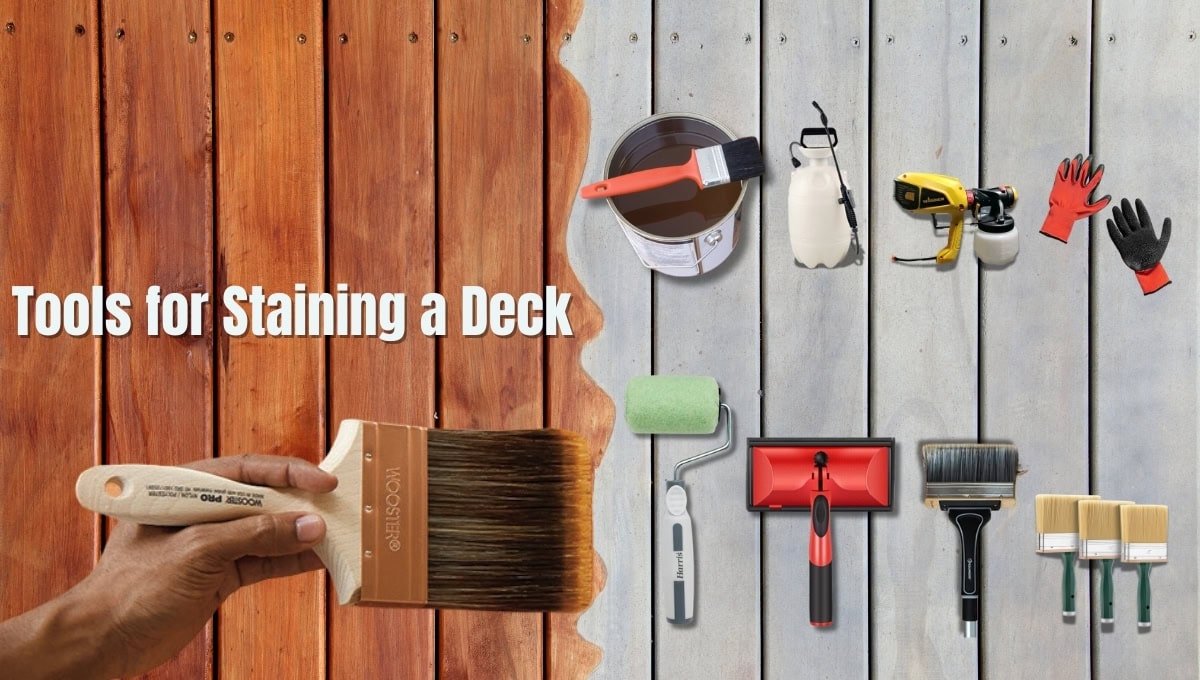
Ever struggled with uneven deck stains, frustrating drips, or missing spots that seem to appear only after the job is done? You’re not alone. The secret to a flawless deck staining project often lies in using the right tools for staining a deck. Whether you’re tackling a DIY project or hiring professionals like McCoy’s Deck Staining and Pressure Washing, understanding the essential tools can make all the difference in achieving a professional-grade finish.
The best tools save you time and effort and ensure that the stain is applied evenly and lasts longer. To help you get the job done right, we’ve compiled a list of the top tools for staining a deck and explained why they’re essential for a flawless finish.
When it comes to achieving a flawless, professional-grade finish, deck stain brushes are a go-to tool. They provide excellent control, work stains deep into the wood grain, and are versatile enough for different types of stains and wood textures.
| Brush Type | Best For | Why They Work | Ideal Use | Example |
|---|---|---|---|---|
| Natural Bristle Brushes | Alkyd oil-based stains | Designed to absorb and release oil-based stains evenly, ensuring smooth application without streaks. | Dense hardwoods like teak or mahogany. | "Natural bristle brushes are perfect for creating a rich, luxurious finish on dense hardwood decks." |
| Synthetic Bristle Brushes | Acrylic-based stains | Resist water absorption, making them durable and effective for water-based stains. Maintain shape for smooth application. | Water-based stains and eco-friendly projects. | "Synthetic brushes are great for homeowners looking to use eco-friendly, water-based stains that offer long-lasting protection." |
| Foam Brushes | Touch-ups and corners | Provide precision and control for detailed application in small or tricky areas. | Tight spots and edges. | "Use foam brushes to reach those tricky spots that standard brushes might miss, like around balusters or railings." |
| Detailing Brushes | Intricate woodwork | Designed for fine detailing and hard-to-reach spaces, ensuring every inch is stained properly. | Ornate or detailed deck features. | "Detailing brushes are ideal for corners and intricate designs that need extra attention." |
The right brush depends on your stain type, wood texture, and project scale:
Oil-Based Stains: Go with natural bristles for smooth, even absorption.
Water-Based Stains: Opt for synthetic bristles to handle the stain’s consistency and avoid wear and tear.
Small Decks or Intricate Work: Use foam or detailing brushes to ensure precision in corners and edges.
Deck stain pads are a favorite among DIYers for their ability to deliver even coverage with minimal effort. Their versatility makes them ideal for flat surfaces, edges, and detailed work.
| Types of Staining Pads | Best For | Why They Work | Example |
|---|---|---|---|
| Flat Pads with Handles | Large, flat surfaces | Glide smoothly across deck boards, applying stain evenly without brush strokes or puddling. | "Flat pads with handles are your go-to tool for staining deck floors quickly and efficiently." |
| Angled Pads | Corners and edges | Angled design ensures easy access to hard-to-reach areas, providing a consistent finish. | "Angled pads make corner work a breeze, eliminating the frustration of missed spots." |
| Microfiber Pads | Smooth finishes, avoiding streaks | Distribute stain evenly for a streak-free application. | "Microfiber pads deliver smooth finishes, perfect for detailed staining tasks." |
| Reusable Pads | Eco-conscious homeowners looking to reduce waste | Eco-friendly and cost-effective, offering reusability and reduced material waste. | "Reusable pads are an ideal choice for reducing waste and saving money on future projects." |
Large Decks: Flat pads with handles for speed and efficiency.
Detailed Work: Angled pads or microfiber pads for clean, precise edges.
Eco-Friendly Approach: Reusable pads that reduce waste and offer long-term savings.
Deck stain rollers are ideal for speeding up large projects while still providing a consistent application. However, choosing the right type of roller is key to ensuring the best results.
| Type of Rollers | Best For | Why They Work | Example |
|---|---|---|---|
| Foam Rollers | Smooth finishes with oil-based stains. | Foam absorbs stain evenly and releases it gently, reducing drips and streaks. | "Foam rollers are perfect for smaller decks where precision and a smooth finish are a priority." |
| Textured Rollers | Rough or uneven wood surfaces. | Textured surface helps stain penetrate cracks and crevices, ensuring thorough coverage on rough wood. | "Textured rollers bring life back to aged decks by reaching deep into rough surfaces." |
| Adjustable-Length Rollers | Hard-to-reach areas. | Reduce strain by extending reach, making them ergonomic for large or multi-level projects. | "Adjustable rollers make deck staining less of a workout, especially for multi-level or expansive decks." |
Smooth Surfaces: Foam rollers for even, polished finishes.
Weathered Decks: Textured rollers for deep penetration and comprehensive coverage.
Large Areas: Adjustable rollers for ergonomic and efficient staining.
Applicators with poles are all about efficiency and comfort. They allow you to cover large areas while standing upright, reducing physical strain.
| Types of Applicator | Best For | Why They Work | Example |
|---|---|---|---|
| Wide Flooring Brushes with Poles | Large deck floors. | Their width and pole attachment make them efficient for covering broad areas with minimal effort. | "Wide flooring brushes with poles let you stain your deck in half the time without breaking your back." |
| Pad Applicators with Poles | Precise control on large projects. | Combine the even coverage of a pad with the convenience of a pole, making them versatile for edges and flat surfaces. | "Pad applicators with poles offer a perfect balance of precision and efficiency for big jobs." |
| Multi-Directional Applicators | Unique deck designs. | Allow for versatile staining angles, ideal for intricate deck patterns or angled boards. | "Multi-directional applicators tackle even the most complex deck designs with ease." |
Simple Decks: Wide flooring brushes for fast, efficient coverage.
Complex Designs: Multi-directional applicators for versatile application.
Large Projects: Pad applicators with poles for comfort and control.
Sprayers are the ultimate time-saver for large decks or detailed projects, providing even application across wide areas and intricate designs.
| Types of Sprayer | Best For | Why They Work | Example |
|---|---|---|---|
| Pump Sprayers | Thin, water-based stains. | Ensure even distribution of lighter stains, perfect for quick and efficient application. | "Pump sprayers are a budget-friendly choice for water-based stain projects." |
| Airless Sprayers | Thicker, oil-based stains. | Provide powerful, precise application, ensuring smooth coverage on even the densest woods. | "Airless sprayers deliver professional results, especially for thicker stains and large decks." |
| Battery-Operated Sprayers | Large or commercial projects. | Combine efficiency with precision, making them ideal for big jobs requiring consistent coverage. | "For large-scale projects, battery-operated sprayers save time while delivering flawless results." |
Small Decks: Pump sprayers for quick, affordable application.
Large Decks: Airless or battery-operated sprayers for consistent, efficient coverage.
Precision Work: Pair any sprayer with back-brushing to ensure stain penetrates deeply.
When it comes to staining a deck, the tools you use can significantly impact the quality of your results.
Using specialized tools designed for deck staining ensures the job gets done faster and with less effort. For instance, a paint pad applicator can cover large flat surfaces in a fraction of the time it takes with a traditional brush, while a stain sprayer makes quick work of intricate details like railings or latticework.
The right tools help you apply the stain evenly and efficiently, reducing product waste. For example, a stain sprayer ensures that you use just the right amount of stain, while a deck brush works the product into the wood grain instead of leaving excess sitting on the surface.
Uneven application is one of the most common issues in DIY deck staining projects. Tools like high-quality brushes and paint pads allow for consistent coverage, ensuring every inch of your deck is properly treated. Even application not only enhances the look of your deck but also ensures uniform protection against the elements.
Using tools designed for staining—like orbital sanders for prepping the surface or painter’s tape to protect non-wood areas—sets you up for success before you even begin staining. The better your tools, the better your results, which translates into fewer touch-ups and longer intervals between maintenance sessions.
For eco-conscious homeowners, choosing reusable or sustainable tools can make your project environmentally friendly. Reusable paint pads and brushes, along with water-based stains applied using sprayers with low overspray, reduce waste and environmental impact.
From efficiency to eco-friendliness, selecting the right equipment can dramatically improve your project’s outcome.
Factors like your deck’s size, the type of wood, and the stain you’re using all play a role in determining the best tools for the job. Let’s walk through a step-by-step guide to help you make the right choice and avoid common pitfalls.
Different wood textures and conditions require specific tools for optimal results.
Smooth Hardwood (e.g., teak, mahogany): Use natural bristle brushes or foam rollers for even application without streaks.
Rough or Weathered Wood: Textured rollers or brushes work best for penetrating grooves and cracks.
Intricate Designs: Detailing brushes or sprayers are ideal for railings, latticework, and corners.
Oil-Based Stains: Natural bristle brushes or foam rollers are excellent for smooth application and deep penetration.
Water-Based Stains: Synthetic bristle brushes or microfiber pads are best for spreading thinner, quick-drying formulas.
Semi-Transparent Stains: Use sprayers or pad applicators for even coverage and to highlight the wood grain.
Small Decks or Touch-Ups: Handheld brushes or foam pads allow for precise control in tight spaces.
Medium-Sized Decks: Flat pads with handles or angled pads offer the right balance of efficiency and control.
Large Decks: Adjustable rollers or stain sprayers save time and reduce physical strain, especially when paired with back-brushing for even absorption.
Before committing to a full application, test your chosen tool and stain on a small, inconspicuous section of the deck. This step helps you:
Confirm the tool’s compatibility with the stain and wood.
Adjust your technique for even coverage.
Avoid potential issues like splatter or uneven absorption.
Pro Tip: “When testing, observe how the tool handles corners, edges, and wood grain variations to refine your approach before tackling the entire deck.”
Ease of Use: Tools like pole applicators or sprayers with adjustable settings minimize effort, especially for beginners.
Ergonomics: Choose tools that are lightweight and comfortable to hold for long periods, especially for large projects.
Proper preparation is the foundation of a successful deck staining project, ensuring smooth application and long-lasting results. To get started, clean your deck thoroughly to remove dirt, mildew, and old stain residue using a deck cleaner or pressure washer, but avoid high pressure that could damage the wood.
Inspect for loose nails, splintered boards, or rot, and repair these issues for a stable surface. Sand the deck to smooth out imperfections and improve stain absorption, always working with the wood grain for uniformity. Protect adjacent areas with tarps and painter’s tape to avoid unwanted stains, and choose a day with optimal weather—mild temperatures and no rain forecast.
Whether you’re a DIY enthusiast learning how to stain deck or considering professional help, these steps will set the stage for a flawless finish.
The right tools can make or break your deck staining project. By considering your deck’s condition, the stain type, and the project’s size, you’ll set yourself up for success with fewer headaches and better results.
Feeling overwhelmed? McCoy’s Deck Staining and Pressure Washing brings professional expertise and top-tier tools to every job. Contact us today for a free consultation and enjoy a flawless deck without the hassle!
A flat staining pad with a handle is often easy to control on deck boards. Use a smaller brush for edges and corners.
Sprayers may create overspray. Use the correct tip, protect nearby surfaces, and back-brush where the product instructions recommend it.
Check the stain label. Natural-bristle brushes are typically used with oil-based finishes, while synthetic-bristle brushes are suited to water-based formulas.
Follow the product label: water-based coatings usually clean up with soap and water; oil-based finishes may require an approved solvent.
For large or repeated projects, better-quality tools can improve comfort and consistency. Smaller one-time projects may only need basic applicators.
Many brushes, rollers, and applicators can be reused if cleaned correctly and stored dry. Replace worn-out pads and damaged parts.